
Kamloops Fire Rescue crews administering more naloxone as opioid crisis grows
Aug 10, 2022 | 4:26 PM
Aaron Schulze
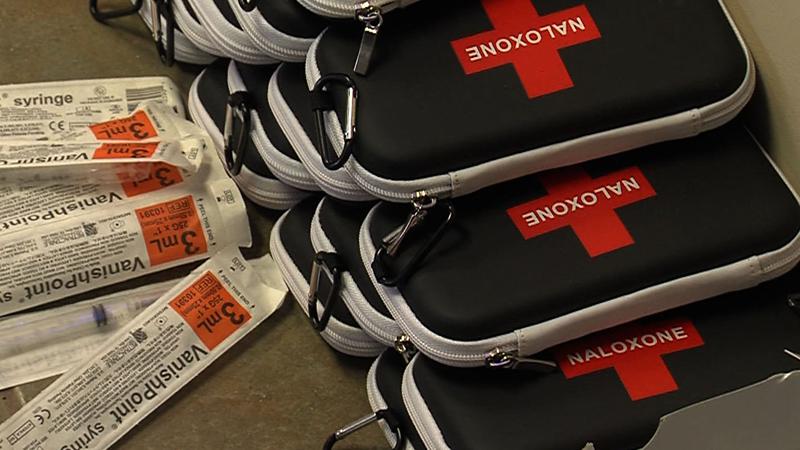
KAMLOOPS — It paints a more complete picture of the opioid crisis in Kamloops: the first quarter numbers from Kamloops Fire Rescue (KFR) show crews have administered significantly more naloxone so far this year.
From January to March of this year, KFR used naloxone 19 times. That’s compared to seven times in 2020 and eight in 2021 — a 138 per cent increase.
“It shows that it’s a problem that’s consistent across the country. A lot of the fire services and medical community are seeing those numbers rise,” said KFR Chief Ken Uzeloc.
Seeing this isn’t easy for firefighters.
“For the sake of the individual and the sake of our members, it’s tough to be seeing people in that state of overdose and delivering naloxone, and possibly having to use [a defibrillator] and other lifesaving measures to bring them back,” said Uzeloc.
“And then the really frustrating part is, potentially, you could be seeing these people again and again because they’re not getting the support to get out of the situation they’re in.”
With the medical field already understaffed, Kamloops city councillor Dale Bass doesn’t want the first responders to get burned out.
“I feel for the firefighters who are having to go out there because they’re having to use more than one Narcan kit now — and you can’t do that constantly and not have it affect you.”
Bass wants action from the province.
“We’ve had a request in for a sobering centre for five years. They’re still studying it,” she said.
“We finally got some complex care beds. But the rehab centres that we have here are few and far between and they work really hard.”
“I had a friend a few years ago who tried to get into Phoenix Centre — he was ready. He was simply ready, and it was, like, a four-month wait list. We don’t make it easy for people who want to get off addictions.” said Bass.
Chief Uzeloc is new on the job and previously worked in Calgary. He said the bigger city faces the same issues as Kamloops, just in greater numbers due to population.
“First responders are going to support the ambulances and the health community in these situations.”
“We’re usually there first, and quicker, and on scene waiting for ambulances to arrive to take over that care, and so the numbers in Calgary were higher. Still the same responses, becoming a bigger portion of the medical responses that fire departments are going to, and that’s indicative of here in Kamloops, just at a lower volume scale at this point.”