Kamloops city council considers community-wide organics collection midway through ‘successful’ pilot
Jun 7, 2022 | 4:30 PM
Aaron Schulze
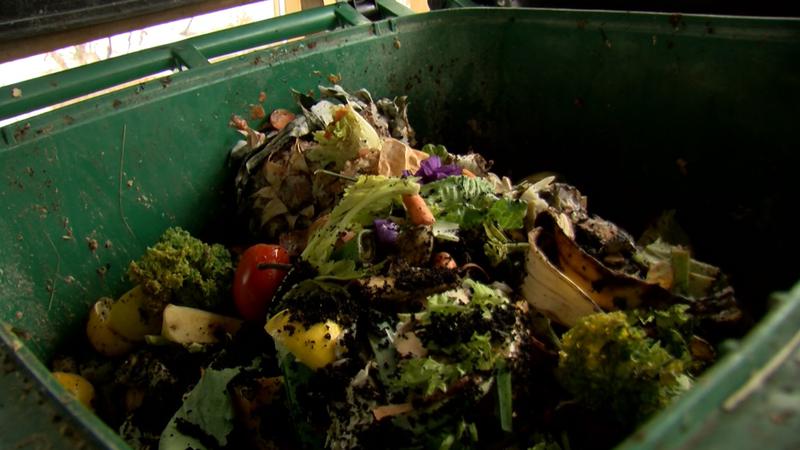
KAMLOOPS — Kamloops city council discussed a community-wide implementation of the curbside organics collection program, midway through a pilot that includes 2,500 homes across five neighbourhoods.
City of Kamloops Streets and Environmental Services Manager Glen Farrow says the pilot has been a success so far.
“We’re seeing huge successes. Great diversion. A lot of buy-in. We’re seeing about 70 per cent of the pilot customers enjoying it, wanting it, so there’s really a lot of energy not just on the pilot group but across the whole community,” said Farrow.
“We’ve been hearing about this for the past decade; a lot of the residents are ready to move forward with this program.”
To roll out for all of Kamloops, the program would cost around $4 million in capital costs. Half of the capital costs will be covered by a CleanBC grant and half by the City’s solid waste reserve.
The additional annual costs for the organics collection would be covered by a $12 annual fee per organics cart.
Marcia Dick, Solid Waste Reduction Coordinator for the City, broke down the price for organics collection.
“For a 120L garbage can and a 120L organics and 245L recycling bin, the average family would be paying just over $100 per year,” said Dick.
“That works out to about $2 a week for having all your waste removed.”
To operate the community-wide implementation, City staff are requesting three more garbage trucks, two new city vehicles and to hire four new full-time equivalent (FTE) employees.
The waste collection schedule would change. Organics would be picked up weekly while garbage and recycling would be picked up every second week.
“We do inspect garbage cans and recycling cans on a regular basis and […] often they’re not full. People put their garbage out even though [they’re] only half full or less,” said Dick.
“[With] recycling carts, we observe about 68 per cent set out rate and they’re less than half full, most of them. For most people, the bi-weekly shift is going to work.”
The third-party composter that processes the organics currently doesn’t accept compostable or biodegradable plastic bags, which are common in other municipalities. Residents must use a paper-based liner.
“What we’re hoping and proposing and negotiating with the processor [is] that they would allow the compostable plastic bag liners, and we would supply roughly a six-month supply to residents at the onset of the program,” said Dick.
If approved, community-wide organics collection would begin in September 2023.
“It’s an exciting day for the community, to see what that direction is… as we move forward with diverting organics,” said Farrow.
“It’s not a new concept, not a new plan, across the province we’re one of the last larger communities that have not moved forward with organic collection.”